Overcome Your Cognitive Biases — Give Sub‑Saharan Africa Serious Attention
“Africa is not the future — it is a rapidly evolving present that too many business leaders still ignore.”
A Fresh Look at an Overlooked Continent
As a frequent traveller for both business and personal reasons, I dedicate time to understanding markets through immersion and fact based analysis. This year alone, I’ve spent time in South Africa, Namibia, and Ghana. Over time, I have seen economic transformations happening without the global attention it deserves.
Africa is often treated as a distant future opportunity. But most dynamics in Sub‑Saharan Africa are moving in the right direction, and the data tells a story few are seeing clearly.
Perception bias remains one of the biggest traps in strategic thinking.
The Demographic Powerhouse of the Century
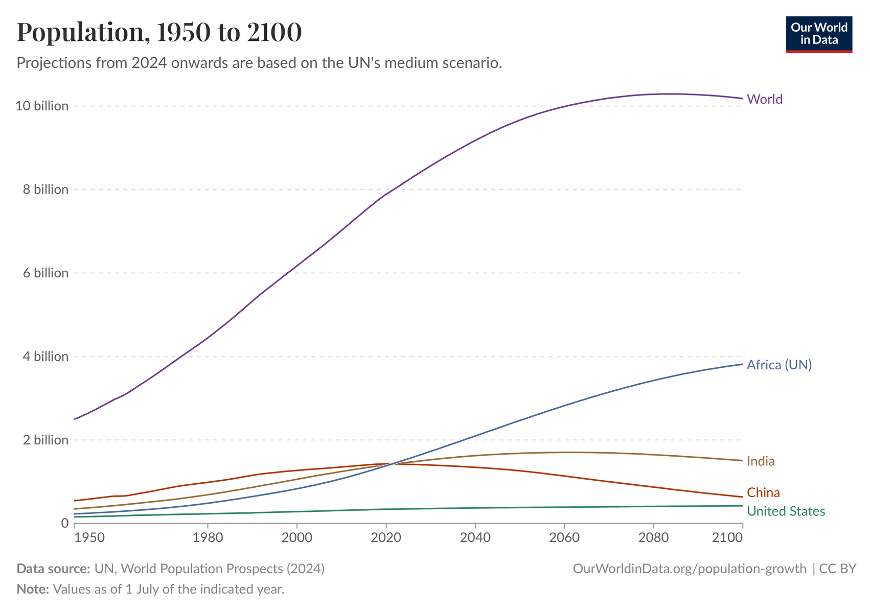
Africa is the only continent projected to keep growing through 2100, when it will represent about one‑third of global population.
Europe, China, Japan, South Korea — are already in demographic decline. India will follow by mid‑century. North America is effectively flat and relies on immigration to grow.
This is not just a demographic shift — it’s a new source of demand, labour, and entrepreneurial energy.
Economic Growth from a Low Base
While Sub‑Saharan Africa starts from a smaller economic base, growth patterns for GDP and GDP per capita remain strongly positive.
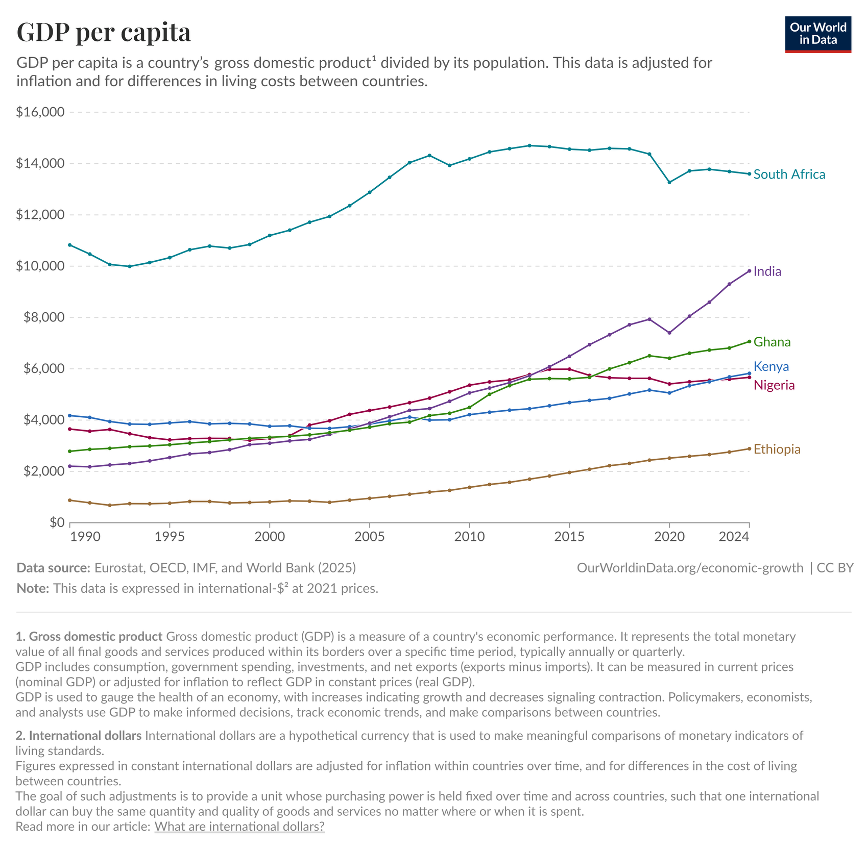
Most nations including Nigeria, Kenya, Ghana, and Ethiopia are showing improving macroeconomic fundamentals and rising consumer markets.
The result is a durable growth story fueled by urbanisation, improving infrastructure, and digital adoption.
Education, Urbanisation, and Longevity
The social foundations of this growth are equally important. Across the continent, education levels, urbanisation rates, and life expectancy are all steadily improving in tandem.
Rising Living Standards and Food Security
Despite global volatility, Africa’s caloric intake per person, access to basic services, and poverty trends show tangible and sustained progress.
These aren’t abstract indicators — they reflect a shift toward middle‑class growth, domestic consumption, and more resilient local economies.
The Mobile Revolution: A Structural Leap
Perhaps the most remarkable transformation has come from mobile technology.
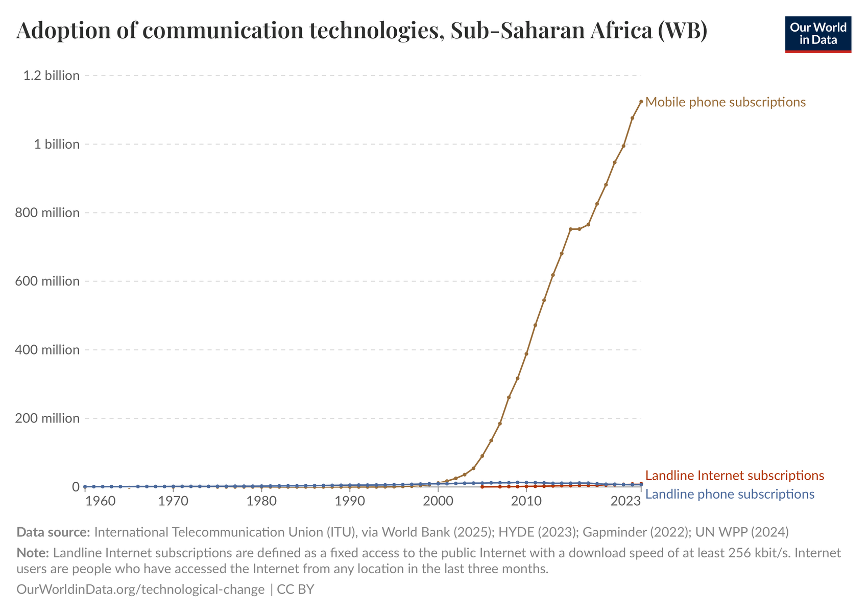
In the last decade, mobile penetration has been transformational - building a large mobile phone market that enables mobile apps, mobile banking, digital trade, and informal‑sector entrepreneurship.
Markets are being built from the bottom up, unleashing grassroots innovation at a speed.
At the national level, China and Chinese companies are building leadership positions in resources, infrastructure, mobile phone networks, mobile phones, apps, mobile finance. Their global leadership positions in solar, EV batteries, and EV transportation will inevitably take their place. Global North companies should not miss this long-term growth opportunity.
The effective closing down of US Aid may dampen development in the very short term, but progress and opportunity are inevitable.
Why This Matters Now
Africa’s trajectory is not a theoretical future — it’s a compounding opportunity visible today.
Corporations, investors, and startups that move early and locally can help shape ecosystems and build leadership positions for long-term growth.